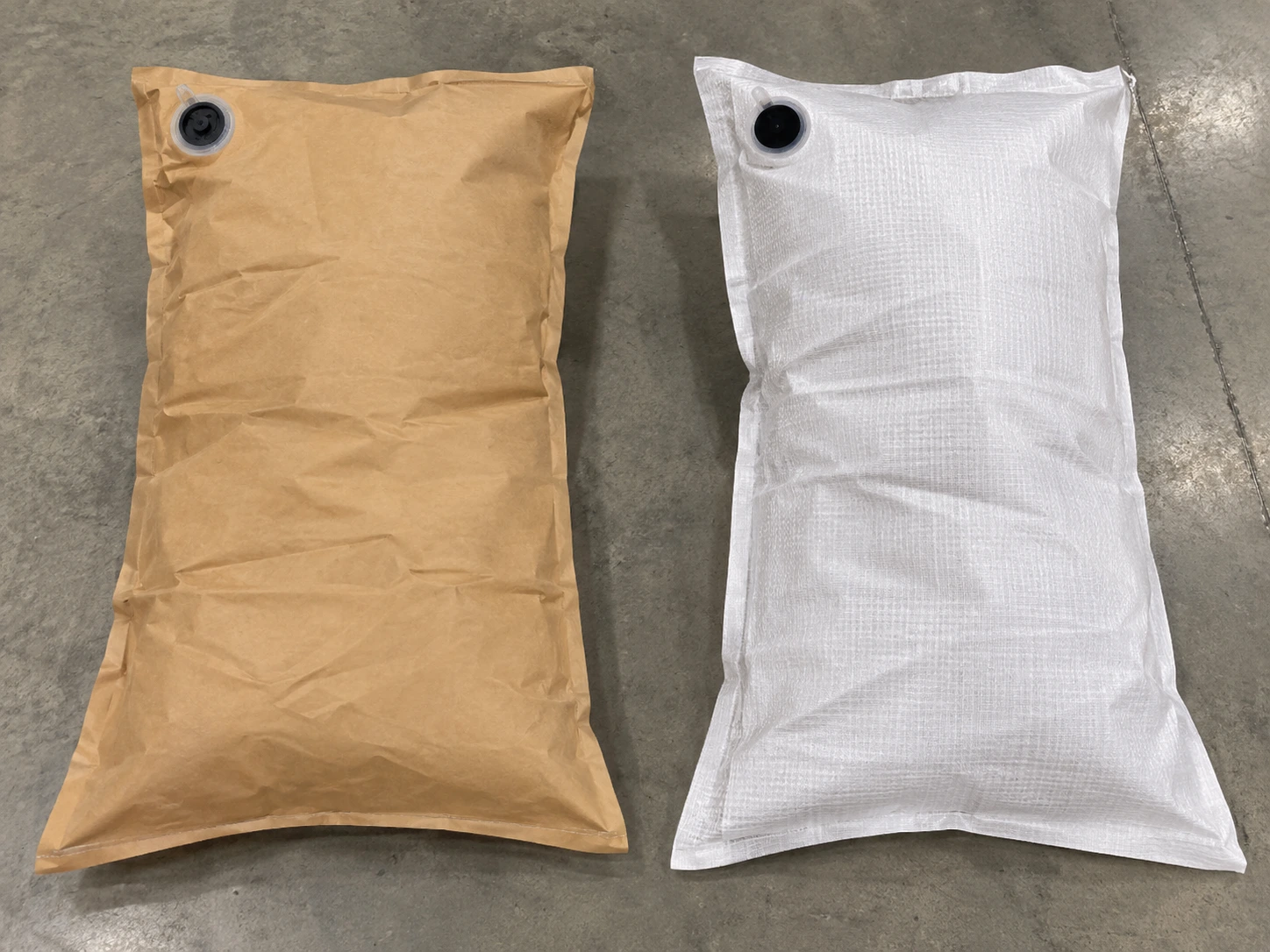
Paper vs Polywoven Dunnage Bags: Which to Choose
Paper vs Polywoven Dunnage Bags: Which One Should You Use?
Every air dunnage bag has the same airtight core: a polyethylene bladder that holds the pressure. What changes is the outer shell, and buyers choose between two families: kraft paper and polywoven, also called woven polypropylene (woven PP). Paper dunnage bags are the economical choice for dry, one-way, medium-duty loads; polywoven bags are the right choice when the route is humid, the load is heavy, or the bags will be used more than once. Picking the wrong shell is one of the quiet causes of cargo damage claims, because the failure only shows up at destination.
This guide compares the two side by side: how each is made, how they behave in a container, what they cost over a shipment, how they are recycled, and a simple way to decide for your own route.
How paper and polywoven dunnage bags are built
Both types use the same principle. An inner bladder made of multi-layer polyethylene film holds the air. The outer shell protects that bladder and carries the load against the cargo faces.
Paper dunnage bags wrap the bladder in several plies of kraft paper. The paper gives the bag its shape and resists the pressure of the cargo pushing against it. More plies generally means a higher load rating.
Polywoven dunnage bags wrap the bladder in woven polypropylene fabric, the same family of material used in FIBC bulk bags and woven sacks. The woven tapes give high tear strength for very little weight, and the fabric does not soften when it gets wet.
The valve is the third component, and it matters for both types. A fast-fill valve shortens loading time; a reusable valve lets the bag be deflated and inflated again on a later trip.
Side-by-side comparison
Factor | Kraft paper | Polywoven (woven PP) |
|---|---|---|
Moisture | Weakens when damp; condensation is a risk | Unaffected by humidity and condensation |
Tear and puncture resistance | Good on smooth faces; vulnerable to sharp corners | Higher; tolerates rough pallets and container floors |
Typical duty | Light to medium loads | Medium to heavy loads |
Reuse | Usually single trip | Can be reused with a reusable valve |
Unit price | Lower | Higher |
Disposal | Paper and film separated for recycling | Recyclable polyolefin |
Best routes | Short, dry, domestic road freight | Sea freight, humid routes, long transits, returnable systems |
Neither type is "better" in every case. The right choice depends on three things: moisture, load and how many times the bag will travel.
Moisture: the deciding factor for sea freight
A sealed container crossing climate zones can produce heavy condensation, often called container rain. Warm, humid air loaded at an Indian port cools at sea, and water forms on the container roof and walls and drips onto the cargo.
Kraft paper absorbs that water. A damp paper shell loses strength, the bag can bulge or split along a fold, and the bracing force against the cargo drops. The bag may still be inflated on arrival but no longer holding the load in place.
Woven PP does not absorb water, so its strength is the same at the destination port as it was at loading. For export sea freight from India, especially during the monsoon or to tropical destinations, polywoven is usually the safer specification. Our export packaging guide covers condensation control for the whole container, including desiccants and dry loading.
Load and handling
The outer shell sets how much force a bag can take before it deforms. Both paper and polywoven bags are produced in graded strengths, from light duty through heavy duty, and the grade should be matched to the weight of the cargo and the mode of transport. Rail shipments in North America add a further requirement: bags certified by the Association of American Railroads (AAR), explained in our AAR dunnage bag guide.
In practice:
Light, uniform cartons on a short road trip are well served by paper bags.
Dense or heavy loads such as drums, bagged chemicals, steel coils, tiles or machinery put more force on the bag faces and are better braced with polywoven bags of a heavy-duty grade.
Irregular or rough cargo faces, for example unwrapped pallets with protruding boards, favour woven PP because of its puncture resistance.
If the bag is the right size and grade but the cargo still moves, the problem is usually placement rather than material. Our guide to dunnage bag sizes and level ratings explains how to match both to the void.
Cost: per bag versus per shipment
Paper dunnage bags cost less per unit, and for a one-way domestic load that is often the end of the calculation.
The picture changes when you look at cost per shipment rather than cost per bag:
Damage risk. One claim for crushed or shifted cargo can cost more than every dunnage bag you buy in a year. If a route carries a real moisture or load risk, the cheaper bag is the expensive choice.
Reuse. A polywoven bag with a reusable valve can be deflated at destination and used again in a closed-loop system, for example between your plant and a warehouse, or on regular routes to the same customer. Spread across several trips, the cost per use falls.
Loading time. Valve type affects how long each container takes to secure, which matters at high volumes.
A reasonable rule: buy paper where the bag will make one dry trip and never come back; buy polywoven where the bag faces moisture, heavy loads or repeat use.
Recycling and sustainability
Both types can be recycled, but in different ways.
A paper dunnage bag is a combination of materials: kraft paper outside, polyethylene film inside. For recycling, the film bladder is separated from the paper, and each goes into its own stream.
A polywoven bag is made of polyolefins throughout, woven polypropylene and polyethylene film, which suits plastics recycling streams. Its reuse potential also counts towards sustainability, because a bag that travels several times replaces several single-use bags.
Searches for "recyclable dunnage bags" are rising as exporters report packaging waste to their customers. If your buyers ask, ask your supplier to state the recyclability of both the bladder and the shell in writing.
Paper vs polywoven compared with other void fillers
Air dunnage bags are not the only way to fill a gap. Paper honeycomb panels, timber bracing and foam blocks are all used. Air bags have three practical advantages over most of them:
They adapt to the void. An inflated bag fills an irregular gap that a rigid panel cannot.
They are light and flat before use. A bundle of deflated bags takes far less storage and freight space than timber.
They avoid timber rules. Solid wood packaging used in international trade must meet ISPM 15 treatment and marking. Air bags avoid that requirement entirely.
Rigid fillers still have a place, for example as a protective layer between a bag and a fragile cargo face, or in voids too wide for a single bag.
How to choose: a quick decision guide
Ask four questions about the shipment:
Will the container or truck see humidity, condensation or monsoon conditions? If yes, choose polywoven.
Is the cargo heavy, dense or rough-faced? If yes, choose polywoven in a heavy-duty grade.
Will the bags come back to you for reuse? If yes, choose polywoven with reusable valves.
Is it a short, dry, one-way trip with light cartons? If yes, paper is the economical choice.
If the answers are mixed, polywoven is the lower-risk option. For the fundamentals of how dunnage bags work, read our air dunnage bags guide.
Stuffex dunnage bags from Shish
Shish SmartPack manufactures Stuffex air dunnage bags in Surat in both constructions: a multi-layer co-extruded polyethylene inner bladder with either a kraft paper or a woven polypropylene outer shell. Paper bags are recommended for medium-duty shipments and woven PP bags for heavy-duty or moisture-prone shipments.
Bags are available in light-duty, medium-duty, heavy-duty and AAR-certified rail grades, in standard sizes of 36" x 48", 36" x 72" and 48" x 96" as well as custom sizes. Options include fast-fill or reusable valves, an anti-slip surface for better grip against container walls, and custom printing. The materials are 100% recyclable. See the full specifications on the air dunnage bags page and our certifications.
Frequently asked questions
Are polywoven dunnage bags stronger than paper ones?
Woven polypropylene has higher tear and puncture resistance and keeps its strength when wet. Load rating, however, depends on the grade of the bag, so always compare bags of the same grade rather than material alone.
Can paper dunnage bags be used for sea freight?
They can on short, dry routes, but condensation inside a container weakens kraft paper. For long ocean transits, humid routes or monsoon shipments, woven PP bags are the safer choice.
Can dunnage bags be reused?
Polywoven bags fitted with reusable valves can be deflated at destination and used again, provided they are inspected for damage before each trip. Paper bags are normally single-use.
Are dunnage bags recyclable?
Yes. Paper bags are recycled by separating the paper shell from the polyethylene bladder. Polywoven bags are made of polyolefins and suit plastics recycling streams.
Which is cheaper over a year?
Paper is cheaper per bag. Polywoven can be cheaper per trip when bags are reused, and either type is cheaper than a damage claim. Compare total cost per shipment, including the risk on your route.
What is the difference between polywoven and woven PP?
None. "Polywoven" is the trade name for woven polypropylene fabric; both terms describe the same outer shell.
Get the right dunnage bag specified
Tell us your cargo, the route and whether the bags will come back to you. Our team will recommend paper or polywoven, the right grade and size, and quote against a specification you can check.
Request a dunnage bag recommendation and quote
Or speak to the team through the contact page.
