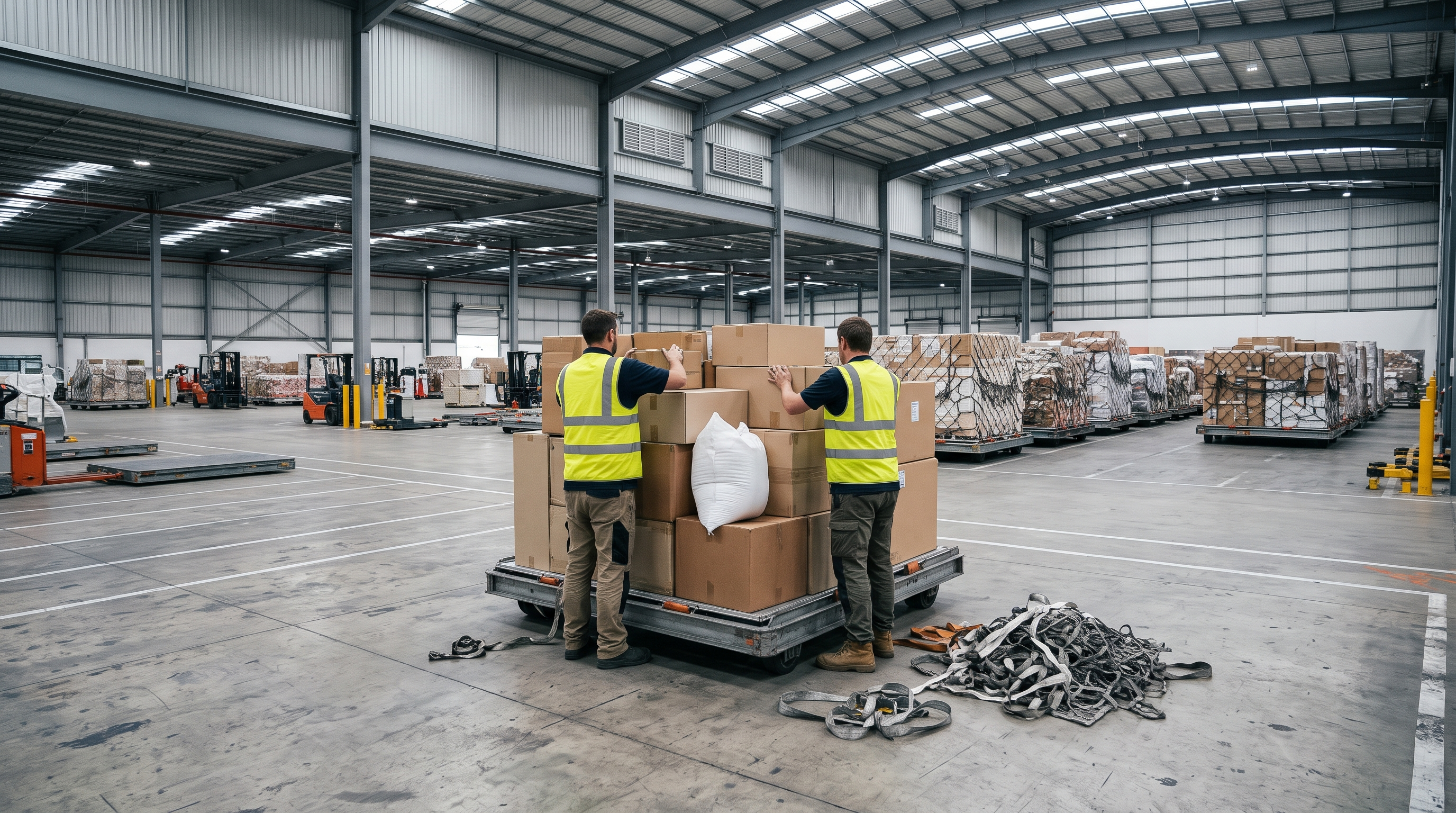
Air Cargo Dunnage: How to Secure Loads for Air Freight
Air freight is the fastest way to move goods, and also the most expensive per kilogram, which is why so many shippers try to keep the packing as light as possible. Air cargo dunnage does a simple job: it stops the load moving inside the pallet or container during take-off, turbulence and landing, without adding weight that you then pay to fly. Inflatable dunnage bags are one of the lightest ways to do that.
This guide explains where loads move in air freight, which kinds of dunnage are used, why inflatable bags suit air cargo, how to size and inflate them for a flight, and what to agree with your forwarder before the shipment is built.
Why cargo moves in an aircraft
A loaded aircraft goes through forces that a truck or container ship rarely produces in such a short time:
Take-off and climb. The load is pushed towards the rear of the aircraft as it accelerates and climbs.
Turbulence. Short, sharp vertical and sideways movements can lift light cartons and drop them back onto the stack.
Landing and braking. The load is pushed forwards, often harder than at take-off.
Ground handling. Pallets and containers are towed on dollies, lifted onto loaders and rolled into the hold. Every bump is passed to the cargo inside.
Airlines restrain the pallet or container itself to the aircraft. What happens inside that pallet or container is the shipper's responsibility. If cartons, crates or drums have space to move, they rub, tip and crush each other on every flight phase. The result is damaged goods, and in the worst case a load that shifts against its netting.
What counts as air cargo dunnage
"Dunnage" is anything used to fill space and hold cargo still. In air freight the common options are:
Type | What it does | Watch out for |
|---|---|---|
Inflatable dunnage bags | Fill gaps between cartons, crates or pallets and press them apart | Must be sized and inflated correctly |
Foam blocks and sheets | Cushion fragile items and fill small spaces | Bulky to store; can be heavy in large volumes |
Corrugated board and edge protectors | Protect corners and spread strap pressure | Lose strength if they get wet |
Timber blocking and bracing | Holds very heavy, dense items | Heavy, and wood for export needs ISPM 15 treatment |
Straps and netting | Tie the load together | Do not fill voids on their own |
Most shipments use a combination. Straps or netting hold the load together; dunnage fills the gaps so the straps stay tight.
Why inflatable dunnage bags suit air freight
They add very little weight
Air freight is usually charged on chargeable weight, the higher of the actual weight and the volumetric weight. Packing weight is weight you pay to fly. An inflatable dunnage bag weighs a small fraction of the timber blocking it can replace, so it fills the same gap without adding meaningful chargeable weight.
They fit irregular gaps
Air cargo is often mixed: cartons of different sizes, a crate, a few drums. Gaps are rarely square. An inflatable bag takes the shape of the void and presses evenly on both faces, which a rigid block cannot do.
They are quick to fit
Air freight is built against tight cut-off times. A dunnage bag is placed deflated and inflated in seconds with a standard inflation tool. Shish's Stuffex air dunnage bags use quick-fill valves designed for exactly this.
They avoid wood treatment rules
Solid wood packaging used in international shipments must normally meet ISPM 15. Plastic and paper dunnage bags are not wood, so that requirement does not apply to them. Our export packaging guide explains ISPM 15 and the other rules exporters need to know.
Altitude and inflation pressure
This is the point that is specific to air cargo. Aircraft cargo holds are generally pressurised, but usually to a lower pressure than at ground level. As the outside pressure drops, the air inside a sealed dunnage bag expands slightly and the bag pushes harder on the load.
For most shipments this is a small effect. It is still worth planning for:
Do not over-inflate on the ground. Inflate to the pressure recommended for the bag grade, not "as hard as possible".
Leave the bag doing its job, not straining. A bag that is already near its limit at ground level has less margin when the pressure changes.
Check with the airline or forwarder if you are shipping very sensitive or fragile goods, or using an aircraft or hold type you have not used before.
The working temperature range of Stuffex bags is listed as –20 °C to +70 °C, which covers typical cargo hold and ramp conditions. If your shipment needs anything outside normal conditions, tell us before you order.
Choosing the right bag
Shell material
Stuffex dunnage bags have a multi-layer co-extruded polyethylene inner bladder and an outer shell of either kraft paper or woven polypropylene.
Paper bags suit medium-duty loads in dry conditions.
Woven PP bags suit heavier loads and shipments that may meet moisture, such as condensation on the ramp or in a cold hold.
Our paper vs polywoven guide compares the two in detail.
Grade
Stuffex bags come in light-duty, medium-duty and heavy-duty grades, with burst pressures from 0.2 to 0.6 bar depending on grade. Match the grade to the weight of the cargo pressing on the bag, not to the size of the gap. Our dunnage bag sizes guide explains how the level ratings work.
Size
Standard sizes include 36" × 48", 36" × 72" and 48" × 96", with custom sizes available. Air cargo voids are often smaller than container voids, so smaller bags are used more often than in sea freight.
A practical rule: measure the gap before you choose the bag. A bag that is too small for the gap has to be over-inflated to touch both sides. A bag that is too large folds over itself and does not press evenly.
How to fit dunnage bags in an air shipment
Build the load tightly first. Stack cartons squarely and as close together as possible. Dunnage fills the gaps that remain; it does not replace good stacking.
Find the voids. Typical gaps are between stacks, between a crate and the cartons around it, and between the load and the container wall.
Place the bag flat and centred in the gap, away from sharp corners, nails and strap buckles.
Inflate to the recommended pressure with a standard inflation tool.
Check that the load is held, then fit straps or netting as the airline or ground handler requires.
Mark the shipment so the receiving team knows there are dunnage bags inside and deflates them before unloading.
Our installation guide covers these steps with diagrams of common gap positions.
Common mistakes in air cargo
Over-inflating to "make sure". This adds stress on the cartons and the bag, especially once pressure changes in flight.
Using dunnage instead of tight stacking. A load stacked loosely with a few large bags still moves.
Placing a bag against a sharp edge. Nails, staples and strap buckles puncture bags. Use a piece of board between the bag and any sharp edge.
Forgetting the receiving end. Unloading a pallet with fully inflated bags can make cartons spring out. Deflate first.
Adding heavy wood where a bag would do. Every extra kilogram of packing is a kilogram you pay to fly.
What to agree with your forwarder
Airline and ground handler rules differ, so agree these points before the shipment is built:
Whether the shipment goes on a pallet or in a container, and its internal dimensions
Any restrictions on materials used inside the unit
Who builds the pallet or container: you, the forwarder or the airline's handler
Whether the goods are classed as dangerous goods, which brings separate packing rules
How the receiving party should unload
Stuffex air dunnage bags from Shish
Shish SmartPack manufactures Stuffex air dunnage bags in Surat, India, for road, rail, sea, intermodal and air cargo. Options include paper or woven PP shells, light to heavy-duty grades, standard fast-fill or reusable valves, smooth or anti-slip surfaces, custom sizes and custom printing. AAR-certified grades are available for rail freight, and the materials are 100% recyclable.
See the full specifications on the air dunnage bags product page, and our quality and management system certifications on the certifications page.
Frequently asked questions
What is air cargo dunnage?
Air cargo dunnage is any material used inside a pallet or air container to fill gaps and stop the load moving during flight and handling. Inflatable dunnage bags, foam, corrugated board and timber blocking are the common types.
Can inflatable dunnage bags be used in air freight?
Yes. They are widely used because they are light, quick to fit and take the shape of irregular gaps. Inflate them to the recommended pressure rather than as hard as possible, and confirm any material rules with your airline or forwarder.
Do dunnage bags burst at altitude?
A bag inflated to the correct pressure for its grade has margin for the small change in pressure in a pressurised cargo hold. Over-inflating on the ground removes that margin, so it is the main thing to avoid.
Paper or woven PP bags for air cargo?
Paper bags suit medium-duty, dry shipments. Woven PP bags suit heavier loads and shipments that may meet moisture or condensation.
Do dunnage bags need ISPM 15 treatment?
No. ISPM 15 applies to solid wood packaging. Paper and plastic dunnage bags are not wood, so it does not apply to them.
Can dunnage bags be reused?
Stuffex bags are available with reusable valves for multi-trip use. Inspect every bag for cuts and wear before reusing it.
Get the right bags for your air shipments
Tell us what you ship by air, the pallet or container type, and the typical gaps in your loads. Our team will recommend the shell, grade and size, and quote against a specification you can check.
