What Is a Geomembrane? Types, Uses & IS 15351 Explained
What Is a Geomembrane? Types, Uses and IS 15351 Explained
A geomembrane is a large, flexible sheet that does one job: it stops liquid passing from one side to the other. In practical terms, a geomembrane is an engineered waterproof barrier laid in the ground to hold water in, such as in a pond, canal or reservoir, or to keep contaminants out of the soil, such as under a waste lagoon or a chemical store. It is the reason a farm pond holds water through summer, and the reason an effluent basin does not poison the groundwater beneath it.
This guide explains what geomembranes are made of, the main types, where they are used, the Indian standard that applies, and what to check before you buy one.
What a geomembrane does
Soil is porous. Water poured into an unlined pit soaks away, and anything dissolved in that water travels with it. A geomembrane breaks that path. Laid over a prepared surface and anchored at the edges, it forms a continuous, very low-permeability barrier.
Engineers use geomembranes for two opposite purposes:
Containment. Keeping valuable water in, for irrigation, aquaculture, drinking water storage and firefighting reserves.
Protection. Keeping harmful liquids out of the ground, for wastewater basins, industrial effluent, landfill cells and secondary containment around tanks.
In both cases, the measure that matters most is permeability: how much liquid can pass through the material under pressure. A good geomembrane has permeability so low that, for practical purposes, the barrier is watertight.
What geomembranes are made of
Most geomembranes are made from plastic polymers, chosen for chemical resistance, flexibility and long life outdoors. The common families are:
Type | What it is | Typical strengths |
|---|---|---|
HDPE (high-density polyethylene) sheet | A smooth or textured solid sheet of polyethylene | Chemical resistance, widely used in large containment projects |
LLDPE (linear low-density polyethylene) | A more flexible polyethylene sheet | Follows uneven ground and settlement more easily |
PVC | A plasticised vinyl sheet | Very flexible, easy to fold and fabricate |
EPDM | A synthetic rubber sheet | Highly flexible, often used for small and decorative ponds |
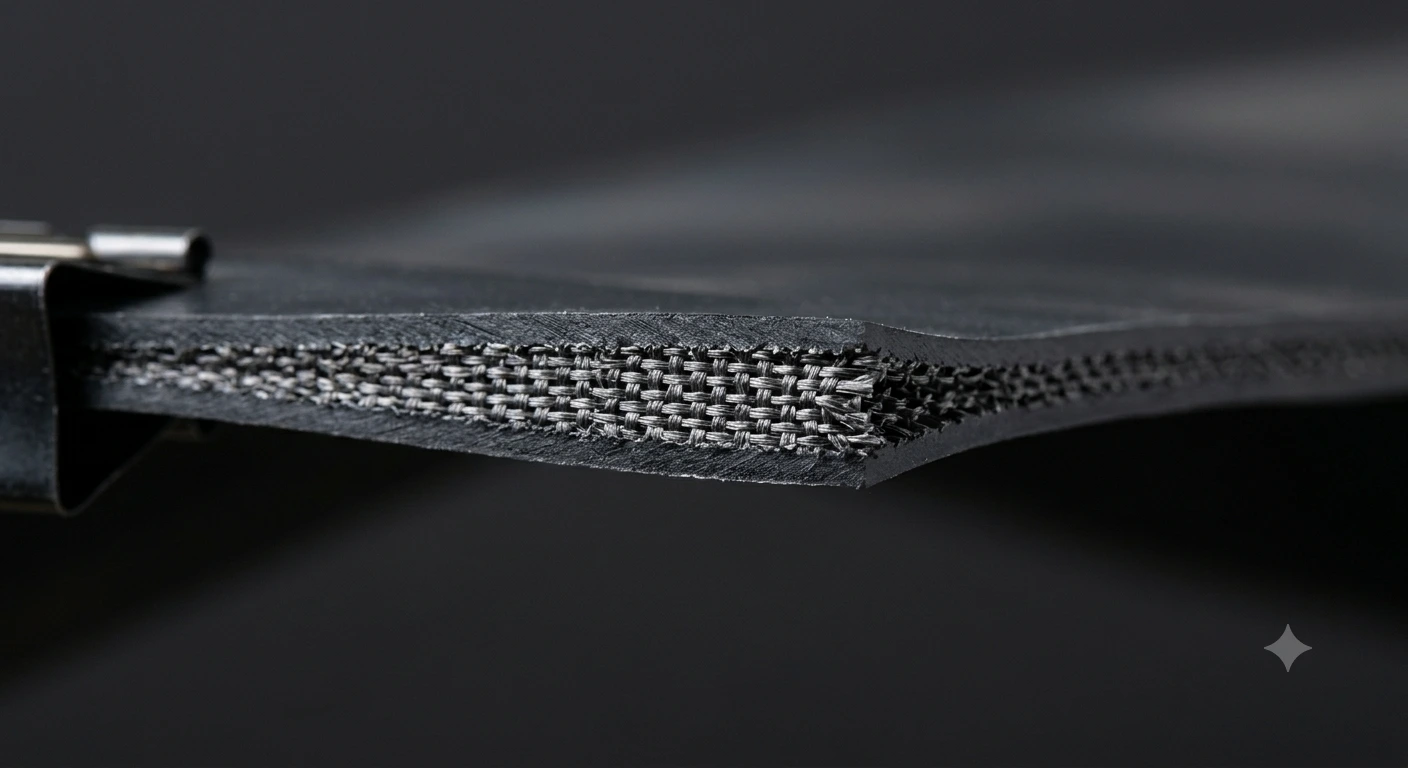
Reinforced (woven, laminated) | A woven polymer fabric core laminated with polyethylene films | Tear and puncture resistance from the woven core, impermeability from the lamination |
Each type suits different projects. For most Indian agricultural and water storage work, the choice is usually between solid HDPE sheet and a reinforced woven, laminated geomembrane.
Reinforced geomembranes: how they work
A reinforced geomembrane combines two layers with different jobs:
A woven fabric core made from polyolefin tapes. This carries the tension, and resists tearing, puncture and the strain of backfilling and water pressure.
Polyethylene film lamination on the fabric. This makes the sheet impermeable and protects the core.
Because the strength comes from the weave, a reinforced liner can be lighter for its strength, easier to handle and fold, and practical to fabricate into large panels. This is the construction used for many farm pond, canal and tank liners in India.
When comparing products, remember that a "500 micron liner" and a "500 GSM liner" describe different things. Micron is thickness; GSM is weight per square metre. Our guide to HDPE pond liner price in India explains why two liners sold under the same name can perform very differently.
Where geomembranes are used
Agriculture
Farm ponds, irrigation tanks and rainwater harvesting reservoirs. Lining cuts seepage so that harvested water is still there when the crop needs it. Our farm pond lining guide covers sizing, cost and installation in detail.
Aquaculture
Fish and shrimp ponds, where a stable water level and clean water matter as much as storage.
Water supply
Drinking water reservoirs and storage tanks. Here the liner must be safe in contact with potable water, which is why drinking water certification matters.
Construction and civil works
Canal lining, earthen dam lining and temporary water storage pits on construction sites.
Industry and environment
Wastewater treatment basins, effluent lagoons, secondary containment under tanks and drums, and landfill lining. In these uses, chemical resistance and long-term integrity protect soil and groundwater.
Geomembrane or traditional lining?
Before geomembranes became widely available, ponds and canals in India were lined with compacted clay, brick or cement. Each still has a place, but each has limits:
Compacted clay is cheap where good clay is close by, but it cracks when it dries and needs regular maintenance.
Brick and cement are durable when intact, but they need far more labour and material, and they crack when the ground settles or moves.
A geomembrane installs quickly, follows the shape of the ground, and flexes with small soil movements instead of cracking.
For most new ponds, tanks and basins, a certified geomembrane gives a more reliable barrier for the money, and it can also be laid over an old cracked lining to restore it.
The Indian standard: IS 15351
In India, geomembrane liners for water containment are covered by the Bureau of Indian Standards specification IS 15351. It sets requirements for the material and its performance, so that a buyer comparing two certified products is comparing like with like.
For projects that involve drinking water, look as well for certification to NSF 61, the widely used standard for materials in contact with drinking water.
Ask any supplier for the certificate itself, not just a claim on a brochure, and check that the certificate covers the product and grade you are buying.
What to check before you buy
Certification. IS 15351 for water containment, plus NSF 61 if the liner will hold drinking water.
Weight (GSM) and thickness. Heavier grades resist puncture better and last longer. Match the grade to your site, not just your budget.
UV stabilisation. Any liner exposed to the Indian sun must be stabilised for long outdoor exposure.
Permeability. Ask for the tested figure. The lower it is, the better the barrier.
Tensile and tear strength. Ask which test standards the figures come from, so you can compare suppliers fairly.
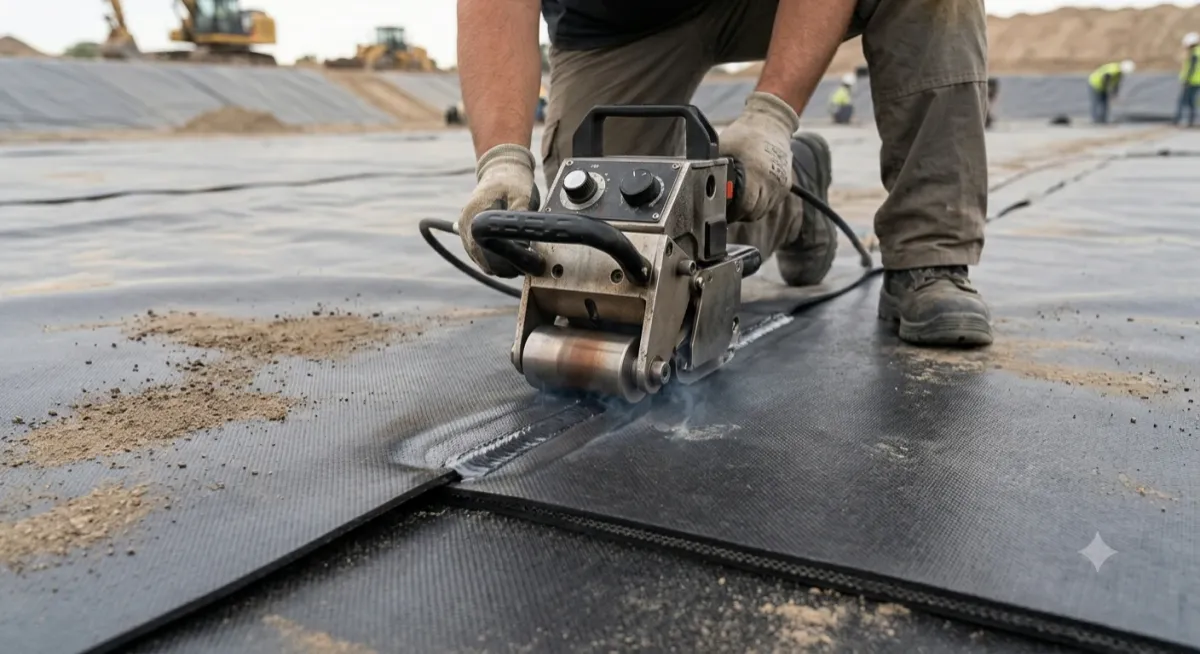
Seaming method. Large projects need joints. Confirm the liner can be hot wedge welded or extrusion welded, and whether factory-fabricated panels are available.
Operating temperature range. It should suit both the heat of summer and the coldest night at your site.
Service life. Ask for the expected life at your grade and exposure, and what it depends on.
How a geomembrane is installed
Installation quality decides how long any liner lasts. The essential steps are the same for most projects:
Prepare the base. Grade and compact the surface, and remove stones, roots and sharp objects.
Place the liner. Unfold it over the prepared surface without dragging it across the ground.
Join panels. Overlap adjacent sheets and weld them for a watertight seam.
Anchor the edges. Lay the edges into an anchor trench around the top and backfill firmly.
Leave slack. A little extra material lets the liner settle under water load without being pulled tight.
Shish Liner geomembranes
Shish Liner is a reinforced geomembrane: a woven polyolefin fabric laminated with polyethylene films, made at our Surat facility. It is certified to BIS IS 15351:2015 for geo liners and NSF 61 for safe use in drinking water systems. Shish Liner is available in 250, 500, 750 and 1000 GSM, with thickness from 0.5 mm to 1.5 mm depending on the grade, in standard black.
Water permeability is less than 1×10⁻⁶ cm/sec. Tensile strength meets or exceeds IS 15351:2015 and ASTM D751, and tear resistance is ASTM D4533 compliant. The liner is UV stabilised for outdoor exposure, rated for −30 °C to +80 °C, and suitable for hot wedge or extrusion welding. Factory-fabricated panels are available up to 8 metres wide in custom lengths. Service life is 8 to 25 years, depending on GSM and exposure conditions.
Full specifications are on the pond liner page, and our certifications are published on the website.
Frequently asked questions
What is a geomembrane sheet used for?
It lines ponds, canals, reservoirs, tanks and basins to stop liquid seeping into or out of the ground. Common uses include farm ponds, fish farming, drinking water storage, wastewater treatment and industrial containment.
Is a geomembrane the same as a pond liner?
A pond liner is one use of a geomembrane. The same kind of material also lines canals, reservoirs, effluent basins and landfills.
What is the difference between HDPE geomembrane and a reinforced geomembrane?
An HDPE geomembrane is a solid polyethylene sheet. A reinforced geomembrane has a woven fabric core laminated with polyethylene films, so its strength comes from the weave and its impermeability from the lamination.
What is IS 15351?
It is the Bureau of Indian Standards specification for geomembrane liners used in water containment. Buying a certified liner means the material meets a defined national standard.
Can a geomembrane be used for drinking water?
Only if it is certified as safe for contact with drinking water, such as to NSF 61. Shish Liner carries NSF 61 certification.
How long does a geomembrane last?
It depends on the material, grade, sunlight exposure and installation quality. Shish Liner has a service life of 8 to 25 years depending on GSM and exposure.
Talk to us about your project
Tell us what the liner will hold, the size of the area, and the site conditions. Our team will recommend a grade, explain the reasoning, and quote against a specification you can check.
Request a geomembrane quotation
Or speak to the team through the contact page.
