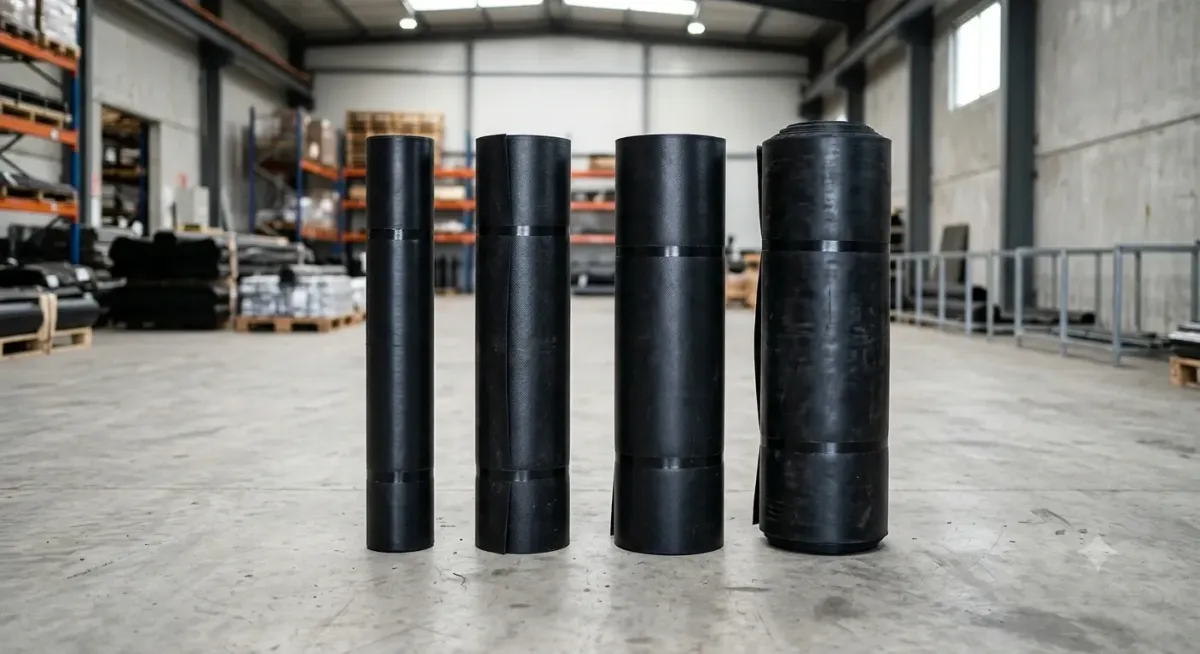
HDPE Pond Liner Price in India: Cost Guide by GSM
HDPE Pond Liner Price in India: What It Costs and What Drives It
Across Indian suppliers, HDPE pond liner is commonly listed between ₹70 and ₹260 per square metre, depending on weight. Lighter 250 GSM material sits at the lower end, while 1000 GSM industrial-grade liner sits at the top. For a one-acre farm pond in mid-weight material, total liner cost generally runs into the low lakhs. But the same "500 micron" liner can differ by 40% in price between suppliers, because micron alone describes almost nothing about what you are actually buying.
This guide explains what drives the cost, how to calculate how much liner your pond genuinely needs, and which specifications are worth paying for.
About the figures in this guide: the prices below are indicative market rates observed across published listings from Indian suppliers and marketplaces. They are provided as context so you can sanity-check a quotation. They are not a Shish Industries price list. For pricing on your own project, request a quotation.
Typical market range by GSM
GSM | Thickness | ₹ per sq m | Service life | Typical use |
|---|---|---|---|---|
250 | ~0.3 mm | ₹70 – ₹85 | 8–12 years | Seasonal storage |
500 | ~0.5 mm | ₹90 – ₹120 | 12–18 years | Farm ponds, irrigation |
750 | ~0.8 mm | ₹150 – ₹190 | 15–22 years | Aquaculture, canals |
1000 | ~1.0–1.5 mm | ₹200 – ₹260 | 20–25 years | Industrial, dam lining |
Rates move with polymer input costs and vary by order size, fabrication and delivery location. Most suppliers set a minimum order of 100 to 500 square metres; below that, expect a premium or retail rates on pre-cut sheets.
Micron or GSM: which one actually matters?
This is where most buyers get caught out.
Micron measures thickness. GSM measures weight per square metre. They are related but not interchangeable, and two liners sold as "500 micron" can weigh very different amounts depending on how they are made.
GSM is the more reliable number, because it reflects how much material is genuinely present. A liner can be stretched thin to hit a thickness figure while carrying less polymer than a heavier liner of the same stated micron.
When comparing quotations, compare GSM. If a supplier will only quote micron, ask for the GSM in writing.
Two different products sold under the same name
"HDPE pond liner" covers two genuinely different constructions in the Indian market.
Monolithic HDPE sheet is a single extruded sheet of high-density polyethylene. It offers very high chemical resistance and is used in landfills and heavy industrial containment. It is rigid, heavier to transport, and needs skilled welding on site.
Woven polyolefin laminated liner is a woven fabric base laminated with polyethylene film on both sides. The weave provides high tensile and tear strength, it is lighter to handle, and it tolerates ground movement well. This is the construction most commonly used for farm ponds, irrigation reservoirs and aquaculture across India.
Neither is universally better. Monolithic HDPE suits aggressive chemical containment; woven laminated liners suit agricultural and water-storage work where puncture resistance and handling matter more. Shish Liner geomembranes use the woven polyolefin construction, laminated with polyethylene film, in 250 to 1000 GSM.
How much liner does your pond actually need?
Budgeting against pond surface area is the most common and most expensive mistake. Your liner has to cover the base, run up all four slopes, and extend into an anchor trench around the rim.
The formula:
Liner length = pond length + (2 × depth) + 2 m anchor allowance
Liner width = pond width + (2 × depth) + 2 m anchor allowance
Liner area = liner length × liner width
Worked example, a one-acre farm pond. A square pond of roughly one acre, 64 m × 64 m, dug to 3 m deep:
Liner length = 64 + (2 × 3) + 2 = 72 m
Liner width = 64 + (2 × 3) + 2 = 72 m
Liner area = 72 × 72 = 5,184 sq m
The pond surface is 4,047 sq m, but you need 5,184 sq m of liner, 28% more than the pond area. That gap is the single biggest reason liner budgets come out wrong.
At the market range above for 500 GSM, that puts material cost somewhere in the region of ₹4.5 lakh to ₹6 lakh before site preparation and installation. Treat that as an order-of-magnitude guide for budgeting, not a quotation.
Add roughly 5% for seam overlaps if the pond is wide enough to need joined panels. Factory-fabricated panels up to 8 m wide reduce the number of site seams, which is where most liner failures begin.
What drives the price difference between suppliers
Polymer quality. Virgin polymer costs more than recycled and lasts considerably longer under UV exposure. A liner that is unusually cheap is usually cheap because of what has been substituted into it.
UV stabilisation. Indian conditions are punishing. An unstabilised liner exposed at the waterline can begin degrading within two or three seasons. Proper UV stabilisation is not optional here.
Certification. The Bureau of Indian Standards specification IS 15351:2015 for laminated HDPE woven geomembranes sets requirements for tensile strength, tear resistance and permeability. An uncertified liner may meet none of them. For drinking water reservoirs, NSF 61 certification confirms the material is safe for potable contact.
Fabrication. Factory-welded panels cost more per square metre than rolls, but cut installation time and site-seam risk substantially.
Width and order size. Wider panels mean fewer seams, and most suppliers set minimum order quantities below which rates rise sharply.
Specifications to insist on
Ask for these in writing on every quotation. Without them you are not comparing like with like:
Permeability below 1 × 10⁻⁶ cm/sec for effective seepage control
Tensile strength tested to IS 15351:2015 or ASTM D751
Tear resistance tested to ASTM D4533
UV stabilisation confirmed, with expected exposure life
Operating temperature range of −30°C to +80°C, which covers all Indian conditions
Seam method by hot wedge or extrusion welding, not adhesive
Certification to BIS IS 15351:2015, plus NSF 61 if the water is for drinking
A supplier who cannot provide test certificates against these standards is asking you to take the specification on trust. View our certifications.
Is a cheaper liner ever the right choice?
Sometimes, yes. A 250 GSM liner in a seasonal tank that is emptied and covered for half the year is a reasonable economy. The calculation changes when the liner is permanently exposed and holding water that matters.
Compare over the life of the asset rather than per square metre at purchase. A 500 GSM liner lasting 15 years covers roughly twice the service life of a 250 GSM liner lasting eight, and the lighter option carries a second purchase plus the disruption of relining a working pond: draining it, removing the old liner, re-preparing the sub-grade.
For a pond that is permanently in service, the heavier liner is usually the cheaper decision over time.
Frequently asked questions
What is the price of HDPE pond liner per square foot in India?
Most Indian suppliers quote per square metre rather than square foot. Converting the common market ranges: 250 GSM works out to roughly ₹6.50 to ₹8 per sq ft, 500 GSM to ₹8.50 to ₹11 per sq ft, and 750 GSM to ₹14 to ₹18 per sq ft. Always confirm which unit a quotation uses before comparing.
How much liner do I need for a 1 acre farm pond?
Approximately 5,184 sq m for a 64 m × 64 m pond at 3 m depth, once slopes and the anchor trench are included. That is about 28% more than the pond's surface area of 4,047 sq m. Use the formula above rather than estimating from pond size.
What is the difference between 500 micron and 500 GSM pond liner?
Micron measures thickness and GSM measures weight per square metre. They are not the same thing, and two liners sold as "500 micron" can differ considerably in weight and durability. GSM is the more reliable basis for comparison.
How long does an HDPE pond liner last in India?
Between 8 and 25 years depending on GSM, UV stabilisation and exposure. Liners permanently exposed at the waterline age faster than those kept submerged. Proper anchoring and clearing sharp stones from the sub-grade make a substantial difference to real-world life.
Why do quotations for the same liner vary so much?
Usually polymer quality, UV stabilisation and certification, none of which appear in a headline micron figure. A quotation without test certificates against IS 15351:2015 or ASTM standards cannot be compared fairly against one that has them.
Do I need BIS certification for a pond liner?
It is not legally mandatory for private farm ponds, but IS 15351:2015 certification is the only practical assurance that a liner meets its stated tensile, tear and permeability figures. For government and subsidy-linked schemes it is frequently a requirement. For drinking water storage, look additionally for NSF 61.
Get a quotation for your project
Market ranges are useful for budgeting, but HDPE pond liner price in India only becomes precise once pond dimensions, intended use and location are known.
Before requesting quotations, have ready:
Pond length, width and depth
Whether the water is for irrigation, aquaculture or drinking
Whether you need rolls or factory-fabricated panels
Your calculated liner area using the formula above
Quote the same figures to every supplier, and ask each for GSM, certification and test data. That is the only way to compare quotations fairly.
Shish Industries Limited manufactures geomembrane liners at a 400,000 sq ft facility in Surat, Gujarat, certified to IS 15351:2015 and NSF 61, in 250 to 1000 GSM with factory-fabricated panels up to 8 m wide.
Send us your pond dimensions and intended use, and we will come back with a specification, GSM recommendation and price for your project.
