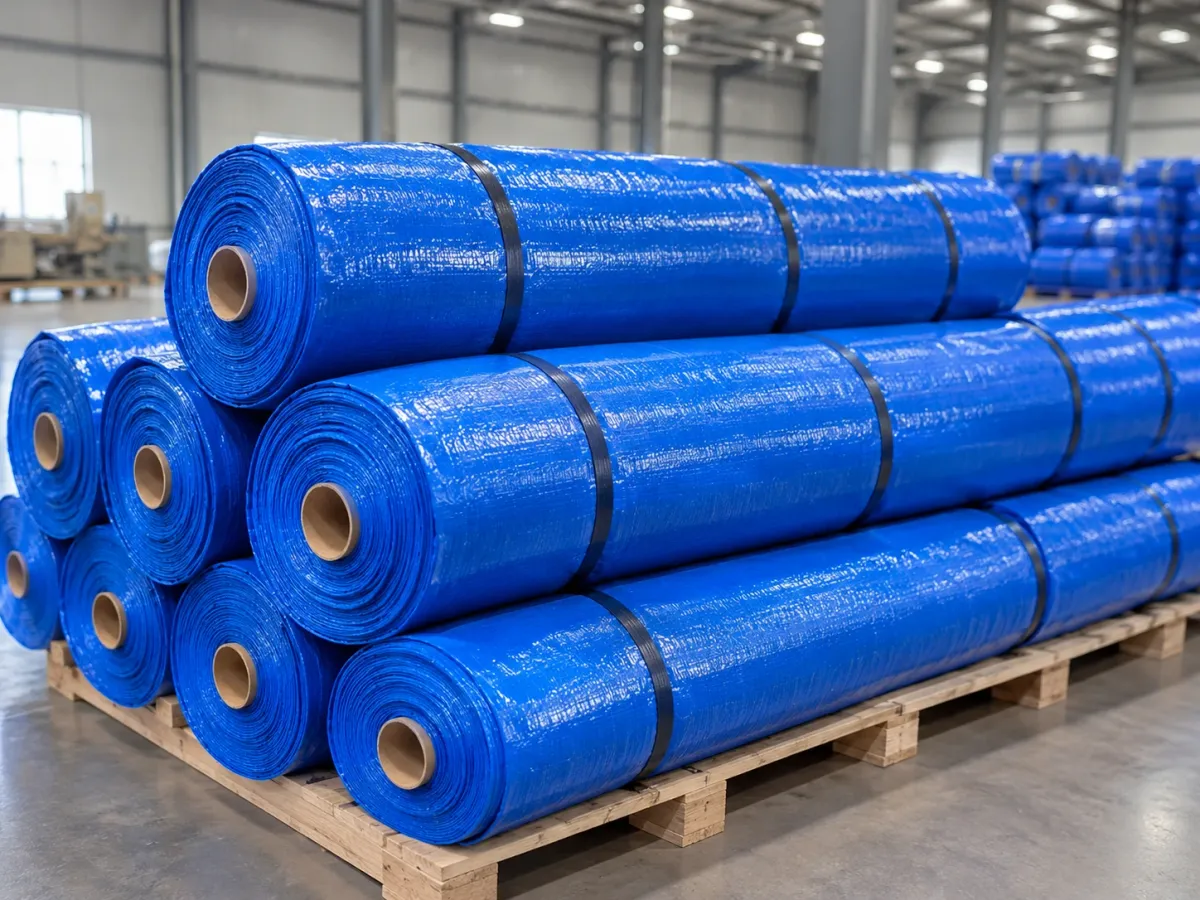
HDPE Tarpaulin Price per Kg: GSM & Grade Guide
HDPE Tarpaulin Price per Kg: GSM Guide and How to Choose
HDPE tarpaulin in India is usually priced by the kilogram, but it is bought by size. Two quotations at the same rate per kg can produce very different prices for the same tarpaulin, and two tarpaulins of the same size can weigh very different amounts. The number that links weight, size and price is GSM, the weight of one square metre of tarpaulin in grams. Once you know the GSM, you can turn any price per kg into a price per sheet, and check whether the tarpaulin you receive is the one you paid for.
This guide explains how tarpaulin pricing works, what the different GSM grades are for, how to calculate the price of a sheet, and what to check before you order.
How tarpaulin is priced in India
Suppliers quote tarpaulin in three common ways:
Per kilogram, which is the most common for HDPE tarpaulin rolls and bulk orders.
Per square foot or square metre, which is common for cut sizes and printed price lists.
Per piece, for standard sizes such as 12 × 18 ft or 18 × 24 ft, which is common in retail.
All three describe the same thing in different units. The link between them is GSM.
Market rates per kg
From published listings by Indian suppliers and marketplaces checked in October 2026, most HDPE tarpaulin market rates fell between roughly ₹100 and ₹210 per kg. A few premium-brand and speciality listings were higher. Rates vary with GSM, colour, lamination, order quantity, region and raw material prices, which move through the year.
These figures are market rates for comparison only. They are not a Shish Industries price list. For pricing on your own requirement, request a quotation.
What GSM means and why it matters
GSM stands for grams per square metre. A 180 GSM tarpaulin weighs 180 grams for every square metre of sheet.
GSM matters for two reasons:
Strength and life. For tarpaulins of the same construction, a higher GSM generally means a thicker, stronger sheet that resists tearing and lasts longer outdoors.
Price. Because tarpaulin is often sold by weight, a higher GSM sheet of the same size costs more, simply because it weighs more.
Common grades and what they are for
Grade | Approx. GSM | Typical use |
|---|---|---|
Standard | ~90 | Light covering, shade, short-term protection |
Super | ~180 | Construction sites, crop and storage covers, general use |
Heavy-duty | ~250 | Truck covers, long outdoor exposure, rough handling |
Choose the grade from the job first. A light tarpaulin on a truck in the monsoon will fail early, however good the price per kg.
How to calculate the price of a tarpaulin
Three simple formulas connect everything:
Area (sq m) = length (m) × width (m). To convert feet to metres, multiply by 0.3048.
Weight (kg) = area (sq m) × GSM ÷ 1,000.
Price = weight (kg) × price per kg.
Worked example: a 12 × 18 ft tarpaulin
12 ft = 3.66 m and 18 ft = 5.49 m, so the area is about 20.1 sq m.
At 180 GSM, the sheet weighs 20.1 × 180 ÷ 1,000 = about 3.6 kg.
At 250 GSM, the same size weighs about 5.0 kg.
At an illustrative rate of ₹120 per kg, the 180 GSM sheet works out to roughly ₹435 and the 250 GSM sheet to roughly ₹600. The size is the same; the price difference is entirely the weight.
Converting price per kg to price per square metre
Price per sq m = price per kg × GSM ÷ 1,000.
At ₹120 per kg, a 180 GSM tarpaulin costs about ₹21.60 per sq m, and a 250 GSM tarpaulin about ₹30 per sq m. This lets you compare a per-kg quotation with a per-square-foot price list on equal terms (divide the per-sq-m figure by 10.76 for per sq ft).
How to check you got the GSM you paid for
Because price follows weight, the GSM printed on a quotation is worth checking on delivery:
Measure the finished sheet's length and width in metres.
Weigh it on an accurate scale.
Actual GSM = weight (kg) × 1,000 ÷ area (sq m).
Eyelets, edge reinforcement and ropes add a little weight, so expect the result to be slightly above the sheet's own GSM rather than below it. If the calculated figure is well below what was quoted, the tarpaulin is lighter, and usually weaker, than the one you paid for.
Choosing the grade by application
A quick way to match the grade to the job:
Shade and light covering for a few weeks: a standard grade around 90 GSM is usually enough.
Construction sites and material storage, such as cement bags, timber and steel left outdoors: a super grade around 180 GSM resists the handling and the weather.
Crop, hay and grain covers through a season: 180 GSM for most uses, moving up to heavy-duty where the cover is moved often or faces strong wind.
Truck and cargo covers: heavy-duty grades around 250 GSM, because the sheet faces wind, rain, sun and rough handling on every trip.
Emergency roof covers: a heavier grade, tied down firmly, because wind uplift on a roof is severe.
If you are unsure between two grades, choose the heavier one for anything that will be moved, retied or left outdoors for months.
What else changes the price
Lamination. Tarpaulins laminated on both sides are fully waterproof and last longer than single-side or unlaminated sheets.
UV stabilisation. Essential for any tarpaulin that will sit in the Indian sun. Without it, the sheet becomes brittle and tears.
Colour. Standard colours are usually the most economical; custom colours may cost more or need a minimum quantity.
Size and fabrication. Custom sizes, joined panels, extra eyelets and reinforced borders add cost.
Quantity. Rolls and bulk orders are generally priced lower per kg than single cut pieces.
Raw material prices. Polymer prices move through the year, so quotations are usually valid for a short period.
What to check before you order
GSM, written on the quotation, not just "heavy" or "premium".
Lamination, on one side or both.
UV stabilisation, for outdoor use.
Finished size, and whether the quoted size is before or after hemming.
Eyelets, their spacing and material.
Colour, and whether it is standard or custom.
Price basis: per kg, per sq ft, per sq m or per piece, and whether GST and delivery are included.
Looking after a tarpaulin
Clear sharp objects from the ground before laying a tarpaulin down.
Spread it evenly so water does not pool in sagging pockets.
Tie it down through the eyelets with ropes, bungee cords or straps, and anchor the corners firmly against wind.
Do not drag it over rough surfaces.
Dry it before rolling or folding it for storage.
Repair small tears straight away with a patch kit before they spread.
Shish Tarp
Shish Tarp is a woven polyolefin tarpaulin laminated with polyethylene films on both sides, made at our Surat facility. It is UV stabilised, 100% waterproof, and rated for −30 °C to +70 °C. It is available in three grades: Standard (~90 GSM), Super (~180 GSM) and Heavy-Duty (~250 GSM), in standard blue with custom colours available, and with custom sizes and eyelets to your specification. Shish Tarp uses the same woven-and-laminated construction approach as our pond liners; our geomembrane guide explains how that construction works.
See the full specifications on the tarpaulin page and our certifications. If you are covering a water store rather than goods, our guide to HDPE pond liner price in India covers the heavier liner grades.
Frequently asked questions
What is the price of HDPE tarpaulin per kg in India?
From published supplier and marketplace listings checked in October 2026, most market rates fell between roughly ₹100 and ₹210 per kg, depending on GSM, lamination, colour, quantity and region. These are market rates for comparison, not a Shish price list.
How do I calculate the weight of a tarpaulin?
Multiply the area in square metres by the GSM, then divide by 1,000. A 12 × 18 ft tarpaulin at 180 GSM weighs about 3.6 kg.
Which GSM tarpaulin is best for a truck?
Heavy-duty grades around 250 GSM are the usual choice for truck covers, because they face wind, rain, sun and rough handling every day.
Is a higher GSM tarpaulin always better?
It is stronger and lasts longer, but it is also heavier and costs more. For light or short-term covering, a lighter grade is often the better value.
What is the difference between price per kg and price per sq ft?
They are two ways of pricing the same sheet. Price per sq m equals price per kg × GSM ÷ 1,000; divide by 10.76 to get price per sq ft.
How can I check the GSM of a tarpaulin?
Weigh the sheet, measure its area in square metres, and divide the weight in grams by the area. Eyelets and borders add a little weight, so the result should not fall below the quoted GSM.
Get a tarpaulin quotation
Tell us the size, the grade or use, the colour and the quantity. Our team will recommend the right GSM and quote against a specification you can check on delivery.
Or speak to the team through the contact page.
